
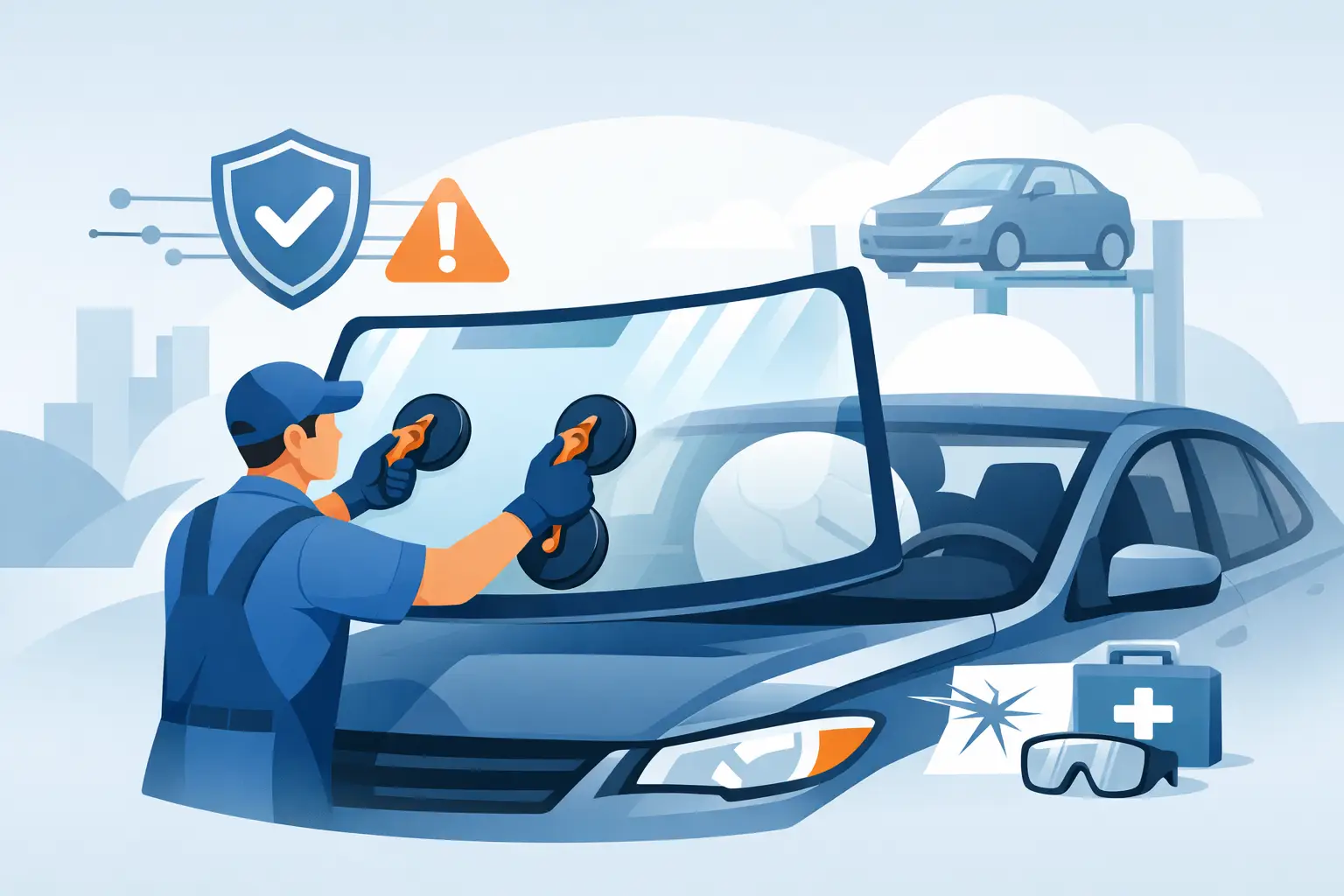
A windshield replacement is not simply a matter of removing broken glass and fitting a new piece into the opening. The answer to why is windshield installation safety critical comes down to what that glass does when you are driving – and what it may need to do in a collision. Your windshield supports clear visibility, contributes to the strength of the vehicle body, and can play an active role in airbag performance.
For Central Coast drivers, a damaged windshield can happen without warning. A rock strike on Highway 101, a crack spreading during a hot Santa Ynez Valley afternoon, or a break-in that damages surrounding glass can quickly turn into a safety concern. Replacing the glass promptly matters, but replacing it correctly matters even more.
Why Windshield Installation Safety Is Critical
Modern windshields are bonded to the vehicle with specialized automotive urethane, not just held in place by trim. Once properly installed and cured, the windshield becomes part of the vehicle’s safety system. That is why installation quality should never be judged only by how clean the finished glass looks.
A trained technician begins with the correct windshield for the vehicle, prepares the bonding area properly, applies approved adhesive, and follows the adhesive manufacturer’s curing requirements. Skipping any of those steps can affect how securely the windshield remains attached when it is needed most.
It helps preserve the vehicle’s structure
The roof, pillars, doors, and windshield work together as a system. During a rollover or serious impact, a properly bonded windshield can help support the passenger compartment. The exact contribution varies by vehicle design, but the principle is consistent: glass that is not securely bonded cannot provide the support the vehicle was engineered to use.
Poor preparation is one of the hidden risks. If old urethane is removed incorrectly, the painted frame is damaged, or rust around the windshield opening is ignored, the new adhesive may not form a dependable bond. The windshield may appear normal from outside the vehicle while the installation underneath is compromised.
It can affect passenger airbag performance
On many vehicles, the front passenger airbag deploys upward and outward toward the windshield before it cushions the occupant. The windshield helps provide the surface the airbag is designed to work against. If glass separates or shifts because it was installed improperly, the airbag may not deploy or position as intended.
This is not a reason to panic over every small chip. Many chips can be safely repaired when addressed early. It is a reason to take replacement seriously when a crack, impact damage, edge break, or failed prior installation makes replacement the safer option.
It keeps safety technology working as intended
Many newer vehicles have cameras and sensors mounted near the rearview mirror. These systems may support forward-collision alerts, lane departure warnings, lane-keeping assistance, automatic emergency braking, adaptive cruise features, or automatic high beams.
When a windshield with an advanced driver-assistance system camera is replaced, calibration may be required. Calibration verifies that the camera can correctly interpret the road after the new glass is installed. It is not an optional add-on or a cosmetic adjustment. Whether calibration is needed depends on the vehicle, its equipment, and manufacturer procedures, but it should always be checked before the job is completed.
A qualified auto glass provider will identify these features before replacement and explain the next steps clearly. If your dashboard shows a warning light after service or a driver-assistance feature behaves differently, do not assume it will correct itself.
The Materials and Procedures Matter
A safe replacement depends on more than the technician’s experience. It also depends on matching the materials and process to the specific vehicle.
The correct windshield must fit the vehicle’s year, make, model, trim, and safety equipment. A windshield may need the right camera bracket, acoustic layer, heating elements, antenna connections, rain sensor area, tint band, or heads-up display compatibility. Using an incorrect part can lead to poor fitment, sensor problems, wind noise, water leaks, or calibration issues.
Adhesive is equally important. Automotive urethane has handling requirements tied to temperature, humidity, product age, and the installation method. It needs enough time to cure before the vehicle can be safely driven. That time is often called the safe drive-away time, and it is not a guess. It is determined by the adhesive manufacturer and the conditions during the installation.
Mobile Service Is Convenient, but Conditions Still Count
Free mobile windshield service can save a driver considerable time. It allows service at home, at work, or at another convenient location without adding another trip to an already busy day. For many Central Coast customers, mobile replacement is the practical choice.
Still, a safe mobile installation requires the right conditions. The technician needs a stable work area, protection from significant rain or contamination, enough room to handle the glass safely, and conditions that allow the adhesive to perform properly. If strong weather, excessive dust, or site conditions create a quality concern, rescheduling or moving the vehicle to a more suitable location may be the responsible decision.
That is not inconvenience for its own sake. It is part of protecting the integrity of the installation. A dependable company should put proper procedure ahead of rushing through a job.
Common Shortcuts That Can Create Problems
Drivers often cannot see the details of a windshield installation, which makes choosing the right provider especially important. A low price can be appealing, particularly when a replacement is unexpected. But a quote that does not account for proper moldings, clips, adhesive, rust treatment, camera calibration, or curing time may not represent the same level of service.
Warning signs can include a provider who cannot explain whether your vehicle requires calibration, promises immediate driving regardless of adhesive instructions, overlooks visible corrosion, or treats water leaks and wind noise as normal. These issues may be repairable, but they should not be accepted as the standard after a replacement.
There can be valid choices between original-equipment and quality aftermarket glass, depending on vehicle requirements, insurance coverage, availability, and budget. The best option is not always identical for every driver. What should not change is the commitment to compatible glass, correct installation procedures, and clear communication about any trade-offs.
What to Expect From a Safety-Focused Replacement
Before work begins, the technician should inspect the damage and confirm the vehicle information. This helps ensure the correct glass and any required components are on hand. They should also identify camera or sensor equipment and discuss calibration if applicable.
During installation, the old glass is removed with care to protect the vehicle’s frame and interior. The bonding area is cleaned and prepared, damaged areas are addressed appropriately, and fresh urethane is applied according to procedure. The replacement windshield is then set precisely into place.
Afterward, you should receive practical instructions about the safe drive-away time and early care. Depending on the installation, that may include avoiding car washes for a period, leaving a window slightly cracked if instructed, and not removing retention tape too soon. These details protect the adhesive bond while it finishes curing.
A workmanship warranty also matters. It gives customers a clear path forward if a covered issue such as a leak or installation-related concern appears after service. Safe Coast Auto Glass backs its workmanship and glass parts with a limited lifetime warranty, alongside trained technicians and mobile service throughout Santa Barbara County, the Santa Ynez Valley, and the Central Coast.
When to Repair and When to Replace
Not every windshield chip requires replacement. A small chip or short crack may be a good candidate for repair when it is away from the driver’s primary viewing area, has not spread extensively, and has not damaged the windshield’s edge or inner layer. Early repair can often prevent further cracking and preserve the original factory glass.
Replacement is generally the better path when damage blocks the driver’s view, reaches the edge, spreads across the windshield, penetrates deeply, or affects a camera or sensor area. A technician can assess the specific damage and recommend the safer option. Waiting too long is rarely helpful, since vibration, temperature changes, and road conditions can make a crack grow quickly.
If your windshield is damaged, the goal is not just to get clear glass back in front of you. It is to restore a safety component your vehicle depends on. Choose trained professionals, ask about calibration and curing, and give the installation the care it deserves before getting back on the road.

Leave A Comment